Actor Model Overview ArkTS utilizes the Acter model for concurrent execution. In this architecture, computation is divided into independent actors. Each actor encapsulates its own state and behavior, communicating exclusively through asynchronous message passing. This isolation eliminates shared mem...
ArkUI provides several methods for building responsive user interfaces. This guide demonstrates three primary approaches using the classic "Hello World" example as a base. Using Grid and GridItem Components The Grid and GridItem components offer a straightforward way to create responsive g...
Overview During application development with HarmonyOS, encapsulating ArkUI components becomes essential for business reuse. Based on practical migration scenarios, three typical component encapsulation patterns have emerged: Public Component Encapsulation: Wrapping system components to provide unif...
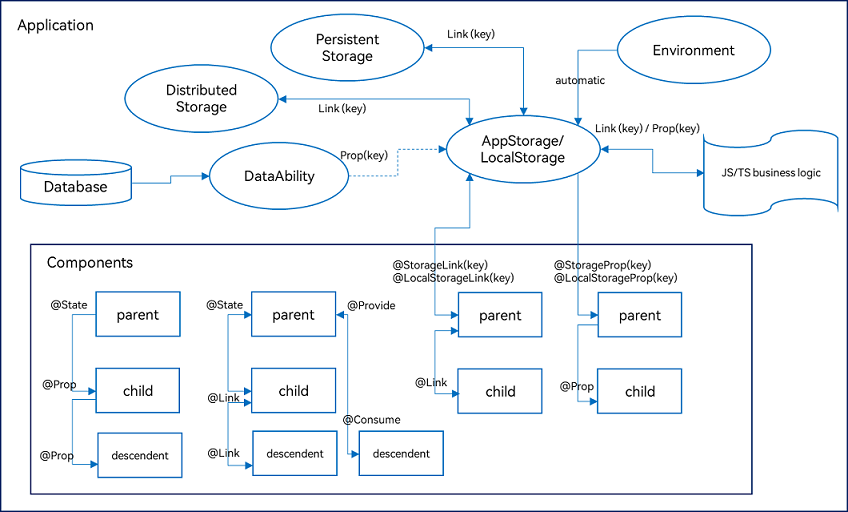
Overview ArkUI provides a variety of decorators for state management, primarily divided into three categories: managing component-owned state, managing application-owned state, and other state management features. The following diagram illustrates the main decorators: Managing Component-Owned State...
UI Builder Function Constraints in ArkTS The build() method and custom builder functions operate under strict compilation rules to ensure predictable UI rendering. Expressions are restricted to string interpolation, conditional rendering, ForEach iterators, and component properties. Modifying applic...
ArkTS is an optimized evolution of TypeScript, but it enforces stricter syntax and type rules that often cause unexpected compilation errors for developers new to the frameowrk. Below is a collection of common issues and their corrected implementations. Promise Handling Differences // Standard TypeS...
In ArkUI's declarative paradigm, UIs are constructed by composing reusable components with clearly defined state and appearance. Below is an illustration using a minimal custom component. @Entry @Component struct MainView { @State labelTxt: string = "Initial Text" build() { Row() { Column(...
ArkTS is the primary development language for HarmonyOS. Its syntax is highly similar to TypeScript, making it easy for front-end developers to adapt to with a low learning curve. Even if you have no prior TypeScript experience, you can start building HarmonyOS applications quickly by learning core...
Developing a product review interface that supports media attachments requires seamless integration between UI components and the system media framework. In HarmonyOS, this is achieved by combining Grid and TextArea components within a scrollable layout, coupled with the @ohos.file.media module for...