Installing MySQL 8 on Ubuntu 22.04 This guide describes the method for installing MySQL 8 on Ubuntu 22.04. Before starting, it's recommended to switch to the root user: # Enter the command below, then input the current user password to switch to root sudo -i 1. Update Package Lists # Network issues...
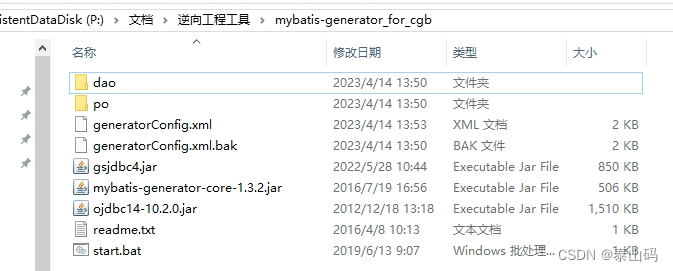
Preparation Databsae driver for connetcion Reverse engineering JAR file mybatis-generator-core-1.3.2.jar generatorConfig.xml start.bat 1. generatorConfig.xml Content <?xml version="1.0" encoding="UTF-8"?> <generatorConfiguration> <!-- Database JDBC driver JAR path,...
1. Recyclable and Low-Fat Products Retreive product IDs where both low_fats and recyclable are 'Y'. SELECT product_id FROM Products WHERE low_fats = 'Y' AND recyclable = 'Y'; 2. Find Customer Referees Select customers whose referee is not ID 2, including those with no referee (NULL). SELECT name FRO...
Introduction to Data Query Language Data Query Language (DQL) is a subset of SQL (Structured Query Language) specifically designed for retrieving data from databases. Common DQL statements and their functions include: SELECT: Retrieves data from a database. Example: SELECT column1, column2 FROM myt...
Checkpoint #1 Task #1 – B+Tree Pages Implement three page classes that represent the data storage units of a B+Tree. B+Tree Parent Page Files: src/include/storage/page/b_plus_tree_page.h and src/storage/page/b_plus_tree_page.cpp. This is a base class containing fields shared by its two subclasses. F...
When analyzing slow queries in MySQL, the EXPLAIN command reveals how the database executes SQL statements. It shows whether indexes are used, if full table scans occur, and provides insights into the optimizer's decision-making process. -- Find employees named Jefabc SELECT * FROM emp WHERE name =...
Testing Environment Source Database: Windows 7 64-bit, Oracle 11g 64-bit Target Database: RHEL6 64-bit, Oracle 11g 64-bit 1. Check Data base Character Set select * from nls_database_parameters; select userenv('language') from dual; 2. Review Transportable Platform Options SELECT * FROM v$transportab...
MCP (Meta-Control Protocol) redefines database access by enabling natural language to SQL conversion. This technology stack is built on three core components: a semantic parsing engine, a dynamic metadata knowledge graph, and an adaptive execution layer. Core Architecture of MCP Semantic Parser Util...
Spring transaction isolation levels fundamentally leverage database-level isolation mechanisms. They define the degree of separation between concurrent transactions and address core concurrency issues including dirty reads, non-repeatable reads, and phentom reads. Concurrent Transaction Problems Bef...
In MySQL, an index (also referred to as a key) is a data structure that storage engines use to locate rows rapidly. By functioning similarly to a book's table of contents, indexes prevent the database from scanning the entire table to find relevant data, thereby significantly improving query perfor...