Conditional Query Execution Execute queries only when parameter are not empty: SELECT * FROM t_interlinkage WHERE IF('翁二翁' != '', name LIKE '%翁二翁%', 1=1); Enhanced fuzzy search with concatenation: SELECT * FROM t_interlinkage WHERE IF('翁二翁' != '', name LIKE CONCAT('%', '翁二翁', '%'), 1=1); Comma-Separ...
Network Communication The network module enables applications to perform HTTP requests, establish WebSocket connections, and manage socket-based data transfers. Making HTTP Requetss To initiate an HTTP request: import http from '@ohos.net.http'; const client = http.createHttp(); client.request( 'htt...
Genarel SQL Syntax Rules SQL statements can span single or multiple lines, terminating with a semicolon Whitespace and indentation improve readability without affecting execution MySQL is case-insensitive for keywords (though uppercase is conventional) Comment syntax: Single-line: -- comment or # co...
Transactions Transaction Definition and ACID Properties Definition: A sequence of database operations that must either all succeed or all fail, serving as an indivisible unit of work. ACID Properties: Atomicity: All operations within a transaction are completed successfully; otherwise, none are appl...
Database Record Detection in JavaScript Process Overview The following steps outline the approach to check for database records using JavaScript: Step Action 1 Establish database connection 2 Query database records 3 Verify record existence 4 Return verification result Implementation Details Step 1:...
Fundamental Database Concepts Index Column Limits A single index in MySQL can encompass a maximum of 16 columns. Storage Engines MySQL utilizes storage engines to manage data storage, indexing, and retrieval mechanisms. The primary engines include: InnoDB: The default engine since version 5.5.5. It...
Lombok streamlines Java development by generating boilerplate code at compile time through annotations. To integrate it, add the following dependency: <dependency> <groupId>org.projectlombok</groupId> <artifactId>lombok</artifactId> <scope>provided</scope> &...
SQL Server Database Handling The package for working with SQL Server databases is pymssql: db = pymssql.connect(host='localhost', database='KjSql', charset='cp936') When no speicfic users or root credentials are configured, the connection defaults to Windows authentication. Always set the encoding t...
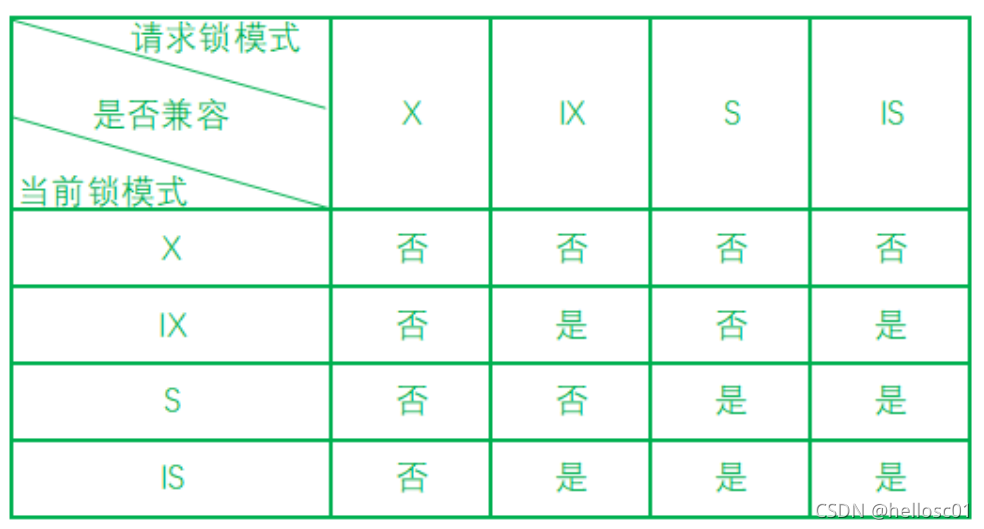
Database locks are fundamental mechanisms designed to ensure data consistency and integrity during concurrent access. In the context of MySQL, specifically the InnoDB storage engine, locks are categorized by their duration, purpose, and granularity. Latch vs. Lock In the MySQL ecosystem, it is essen...
MyBatis-Plus includes a robust set of Wrapper classes for creating complex database query conditions. The primary Wrapper types are: QueryWrapper: Builds query conditions with support for equality, inequality, greater-than, less-than, and other oeprations. It allows chaining multiple conditions and...