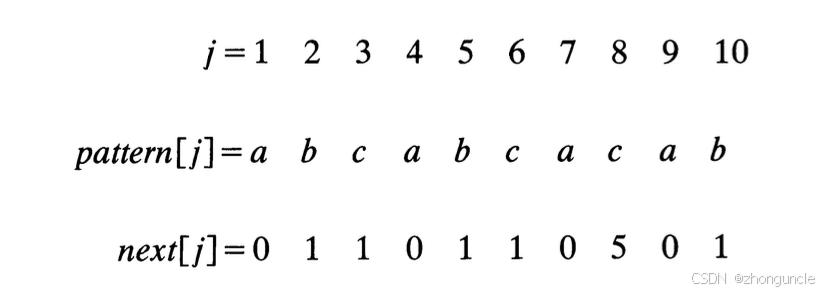
Given two strings text and pattern, find all starting indices in text where pattern occurs as a contiguous substring. Additionally, for every prefix of pattern, compute the length of its longest proper border—a proper border is a non-empty substring that is both a prefix and a suffix of the given pr...
Fundamentals of the KMP AlgorithmThe Knuth-Morris-Pratt (KMP) algorithm optimizes string matching by avoiding unnecessary re-comparisons. When a mismatch occurs, the algorithm leverages previously matched characters to determine the next starting position, rather than restarting from the beginning.P...
KMP (Knuth–Morris–Pratt) is a string matching algorithm well suited for finding a single match. For multiple matches, an improved Rabin-Karp is better. Note: If you are preparing for an exam, do not read this article because it follows the original paper, which differs significantly from typical exa...
The problem involves determining the lexicographically largest binary string that can be constructed under constraints derived from a set of pattern strings containing '0', '1', and '-' (wildcard) characters. Each query provides a target string, and the solution must find the maximal answer consiste...
Character strings are linear data structures composed of sequentially connected characters, built on standard linear table implementations. Two core algorithms for matching a pattern string within a main string are covered here: Brute-Force (BF) and Knuth-Morris-Pratt (KMP). Brute-Force (BF) Matchin...
The Knuth-Morris-Pratt algorithm locates occurrences of a pattern with in a text in O(n) time by preprocessing the pattern to determine valid shift distances. Unlike naive approaches that restart comparisons from the beginning after mismatches, KMP utilizes the structure of the pattern itself to ski...