def compute_value(input_num): ''' Calculate 2*input_num + 1 :param input_num: integer value :return: computation result ''' result = 2 * input_num + 1 return result output = compute_value(3) print(output) Function components: def: keyword for function declaration Function name: identifier used to ca...
To demonstrate that fully parenthesizing an expression with n elements requires exactly n-1 pairs of parentheses, consider a recursive approach. For n=1, no parentheses are needed. For n>1, expressions are formed by combining two subexpressions: package main import ( "fmt" "strings...
Processing hierarchical datasets frequently necessitates transforming a flat collection into a nested tree format. In C#, recursion provides an efficient mechanism to traverse parent-child relationships defined by identifiers. The following implementation demonstrates how to retrieve complete sub-st...
Binary Tree Problem-Solving Approaches When solving binary tree problems, two primary thinking patterns are commonly used: Traversal-Based Approach: This approach focuses on whether the solution can be obtained by traversing the binary tree once. Typically, a traversal function (such as pre-order, i...
Trimming a Binary Search Tree (LeetCode 669) The algorithm removes all nodes not within the range [low, high]. The key insight is the nested recursion: when the current node's value is outside the range, one entire subtree can be discarded, but the other subtree may still contain out-of-range nodes...
Constructing a Maximum Binary Tree Given a unique integer array nums, construct a maximum binary tree following these recursive steps: Create a root node with the maximum value in the array. Recursively build the left subtree from the elements before the maximum value. Recursive build the right subt...
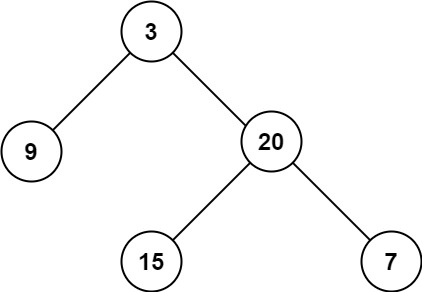
The problem requires constructing a binary tree given two integer arrays, preorder and inorder, representing the tree's preorder and inorder traversals, respectively, and returning the root node. The solution leverages the distinct properties of these traversal orders. In a preorder traversal, nodes...
The Fibonacci sequence begins with two initial values and each subsequent term equals the sum of the previous two. For this treatment, the sequence starts 1, 1, 2, 3, 5, 8, .... Iterative Approach An iterative method computes the desired term by updating two running values across a loop. long iter_f...
Recursive Implementation of Combinatorial Enumeration Given two integers n and m, generate all combinations of m distinct integers from the set {1, 2, ..., n} in lexicographical order. #include <iostream> #include <vector> using namespace std; vector<vector<int>> results; vec...
Tower of Hanoi: A Recursive Challenge The Tower of Hanoi is a classic puzzle involving three pegs and a number of disks of different sizes. The objective is to move the entire stack to another peg, following these rules: only one disk can be moved at a time, and a larger disk cannot be placed on top...