Contest OverviewMisreading the first problem caused a 20-minute delay. The second problem presented a psychological barrier despite being solvable for partial points. Skipping the third problem's statement cost easy points, while the fourth problem failed due to inefficient modular inverse preproces...
Search algorithms are fundamental techniques for locating specific elements within data collections. These collections may be stored as arrays, linked lists, or hash tables. Choosing the right search strategy significantly impacts application performance. Search Algorithm Categories Sequential Searc...
Core Concepts and Prerequisites To effectively implement merging operations on range-based data structures, understanding dynamic node allocation and order statistic trees is essential. Standard segment trees often consume excessive memory when built fully; dynamic initialization allowss resources t...
LinkedList Header Definition The underlying data structure is a singly linked list. We define the node structure to hold generic data, which will be specialized for the contact information later. #ifndef LINKED_LIST_H #define LINKED_LIST_H #include <stdlib.h> #include <assert.h> #include...
Hash tables provide O(1) average-time complexity for insertion, deletion, and lookup operations. They are the optimal choice when the primary requirement is rapidly verifying the existence of an element within a collection or tracking frequency counts. The core mechanism relies on a hash function th...
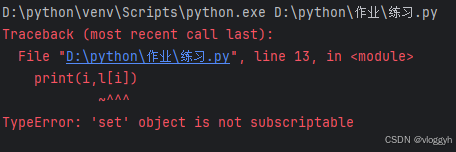
Python sets are unordered, mutable data structures that enforce unique, hashable elements—ideal for duplicate removal and formal set arithmetic. Core Set Properties and Initialization Sets cennot contain mutable types like lists, dictionaries, or other sets; valid elements include integers, floats,...
Stack and Queue Fundamentals A queue follows the First-In-First-Out (FIFO) principle, while a stack follows the Last-In-First-Out (LIFO) principle. Understanding Stack Implementation in C++ Is the C++ stack considered a container? Which STL version does our stack implementation belong to? How is the...
An empty list can be defined using square brackets [] or the built-in list() function. container = list() # or container = [] container.append(1) print(container) # Output: [1] Lists can hold various data types and can be nested. To access elements in a nested list, use multiple indices. nested_data...
This problem requires the implementation of a standard Last-In-First-Out (LIFO) stack capable of processing a high volume of operations efficiently. The solution must handle multiple independent test cases. Core Functional Requirements The data structure must support the following commands: push(x):...
Python Sets In Python, a set is an unordered collection of unique elements. It is primarily used for mathematical set operations like union, intersection, difference, and symmetric difference. Sets are defined using curly braces {}, but note that you cannot include mutable types (e.g., lists) as ele...