Simulating Filesystem Constraints and Loop Device Mounts A basic loop device can be created and mounted to create a space-restricted test environment: # Create a 100K file and associate it with a loop device # Then mount it at /app/log dd if=/dev/zero of=/tmp/100k bs=1K count=100 losetup /dev/loop0...
AWK Syntax and FundamentalsAWK functions as a pattern scanning and processing language. It interprets data as a series of records (lines) and fields (columns). The default separator is whitespace. The general execution flow follows awk 'pattern { action }' filename. If a pattern evaluates to true, t...
Installing Redis from Source on Linux To install Redis on distributions like CentOS 7 or Ubuntu 18.04: Download the source archive: wget http://download.redis.io/releases/redis-4.0.0.tar.gz Extract the archive: tar -xvf redis-4.0.0.tar.gz Compile the source: cd redis-4.0.0 make If compilation fails...
Distributing incoming network traffic across multiple backend servers mitigates single-point bottlenecks, enhances bandwidth capacity, and ensures continuous service availability. When individual nodes exceed their processing thresholds, clustering mechanisms route requests simultaneously. This arch...
System calls operate as the strict enforcement boundary between unprivileged user applications and privileged kernel operations. When an application requires hardware access, memory management, or scheduling services, it cannot execute these instructions directly. Instead, it triggers a controlled t...
epoll is a scalable I/O event notification mechanism in the Linux kernel, widely used by high-performance systems like Nginx, Redis, and Netty. Its design overcomes fundamental limitations of older approaches such as select and poll, enabling efficient handling of tens or even millions of concurrent...
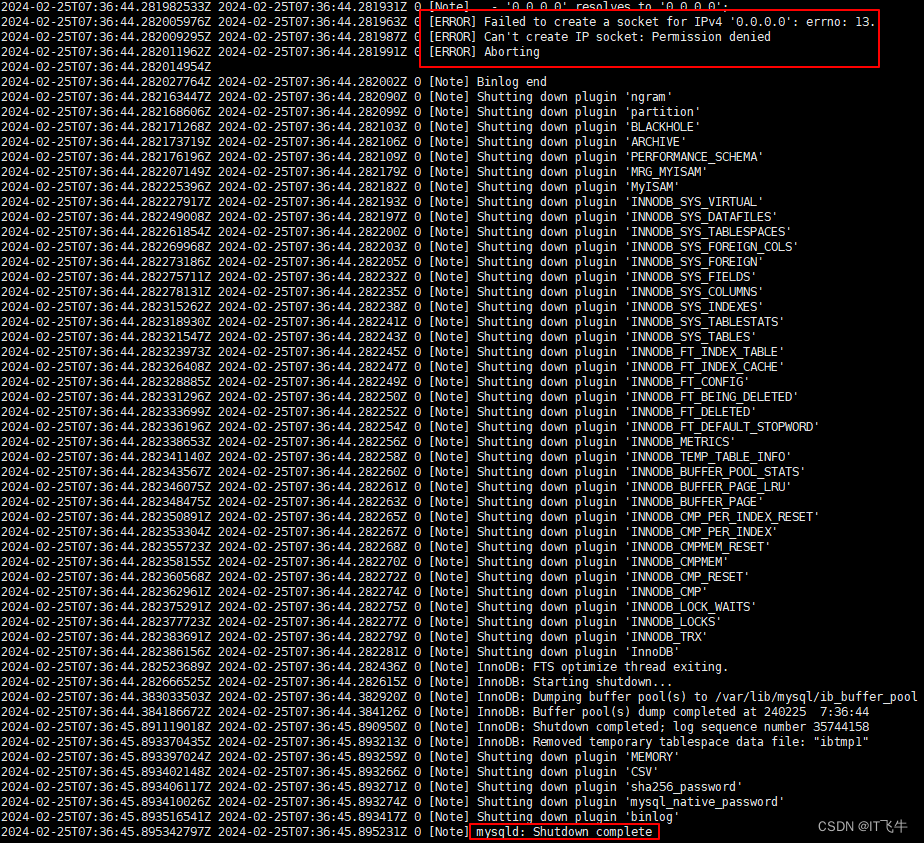
Analysis On an Ubuntu 20 server, a MySQL container based on Docker had been running stably. However, after installing Apache2 and MySQL directly via apt on Linux, restarting the MySQL container failed. When encountering a problem, first check the container's error logs. Execute the log view command:...
Switching to Root User su Removing Previous Docker Versions If Docker is already installed on the system, first remove the existing version: yum remove docker \ docker-client \ docker-client-latest \ docker-common \ docker-latest \ docker-latest-logrotate \ docker-logrotate \ docker-engine Configuri...
Docker packages applications along with their runtime dependencies into portbale, isolated units—enabling consistant execution across environments. Its architecture draws inspiration from physical containerization: each container opeartes independently, with strict process and filesystem boundaries...
File Content Viewing and Concatenation The cat command is primarily used to display the contents of a file to the standard output. It reads the file sequentially and writes the data to the terminal. Since Linux treats files as collections of attributes and content, cat specifically targets the cont...