Flask (Jinja2) - Template Inheritance
Introduction
Templaet inheritance is a key concept in Jinja2, allowing you to define a base template with common layout and blocks that child templates can override. It promotes code reuse and maintainability.
Code Exapmles
Base Template: base.html
<!DOCTYPE html>
<html lang="en">
<head>
  <meta charset="UTF-8">
  <title>{% block title %}{% endblock %}</title>
</head>
<body>
  <h3><a href="#">Fixed Navigation Bar</a></h3>
{% block content %}
{% endblock %}
<footer style="margin-top: 100px">Fixed Footer</footer>
</body>
</html>
Child Template: child1.html
{% extends "base.html" %}
{% block title %}
Child 1 Title
{% endblock %}

{% block content %}
Child 1 Body Content
{% endblock %}
Child Template: child2.html
{% extends "base.html" %}
{% block title %}
Child 2 Title
{% endblock %}

{% block content %}
Child 2 Body Content
{% endblock %}
Flask Application: app.py
@app.route("/child1")
def child1():
    return render_template("child1.html")

@app.route("/child2")
def child2():
    return render_template("child2.html")
Results
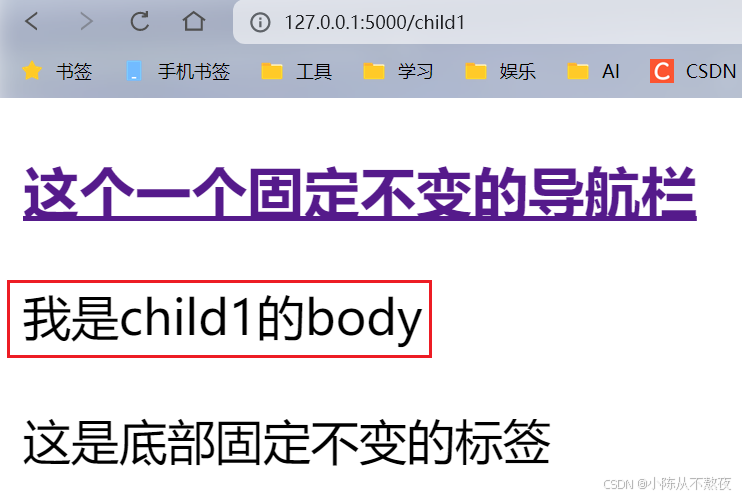
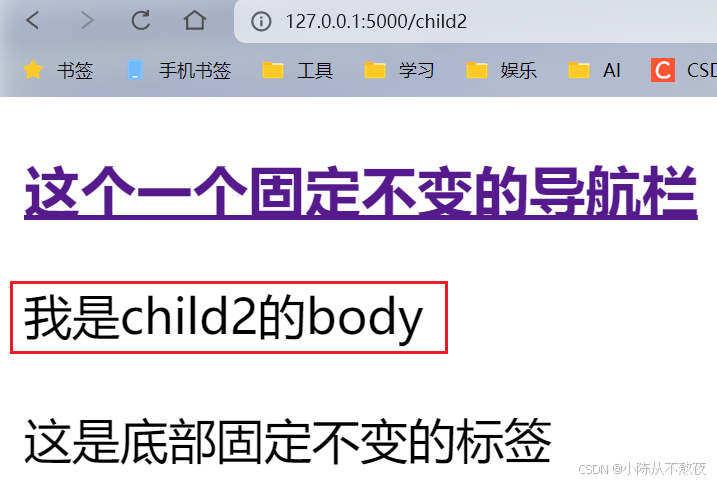
The child templates inherit the base layout and fill in the blocks. The navigation and footer remain the same, while the title and body change.
Practical Use
Template inheritance is useful when you have a consistent layout and want to avoid duplication. It helps in building modular and maintainable web applications.
