Object-Oriented Programming Core Principles of OOP Inheritance: The mechanism where a new class derives properties and behaviors from an existing class. The existing class is referred to as the superclass or base class, while the new class is called the subclass or derived class. Inheritance ensures...
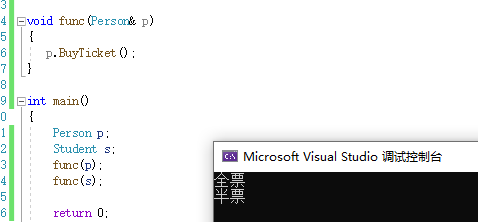
Understanding Polymorphism in C++ What Is Polymorphism? Polymorphism allows the same operation to produce different outcomes depending on the object performing it. Consider the act of purchasing a ticket: a regular customer pays the full price, a student receives a discount, and a soldier gets prior...
Upcasting: Treating a Subclass as Its Superclass Upcasting occurs when a subclass instance is referenced through a superclass variable, treating the more specialized type as a more general one. Because every subclass is a kind of its parent, this conversion is always safe and requires no explicit ca...
Dynamic Memory Safety and Resource Menagement Heap allocation failures typically occur when dynamically acquired resources remain unreleased after use, often triggered by pointer reassignment, exceptional control flow, or mismatched allocation primitives. Effective mitigation relies on deterministic...
Development Environment and Project Configuration When managing multiple source files within a single C++ project using CMake, you can automate the generation of executables for each .cpp file found in the source directory. This is particularly useful for competitive programming or educational modul...
Virtual Functions A function becomes virtual when prefixed with virtual. class BaseClass { public: virtual void operation() {}; // This is a virtual function }; Inheritance of Virtual Functions Virtual function inheritance embodies interface inheritance, where the function signature (including retur...
Core Prerequisites for Polymorphic Behavior Runtime polymorphism in C++ requires two simultaneous conditions. First, a base class method must be marked virtual and subsequently overridden in a derived class. Second, the invocation must occur through a base class pointer or reference. When these cond...
Polymorphism is a core principle of object-oriented programming in C++. It enables different behaviors through a common interface. There are two primary forms of polymorphism: Static Polymorphism (Early Binding): Achieved through function overloading and operator overloading. The function address is...
Exploring Virtual Tables (VTables) To understand the lifecycle and structure of virtual tables in C++, let's start with a set of test classes involving virtual functions and multiple inheritance. Virtual Function Classes #include <cstdio> class SampleClass { public: int internalValue; virtual...
Polymorphism enables objects of different classes to be treated as objects of a common base class, allowing the same function call to produce different behaviors depending on the object type. For example, consider a ticket purchasing system where a regular person pays full price, a student pays half...