Batch database opreations execute mlutiple table modifications over a single database connection, reducing overhead compared to separate single-statement cals. package com.example.entity; import lombok.AllArgsConstructor; import lombok.Data; import lombok.NoArgsConstructor; import java.io.Serializab...
Spring Bean Lifecycle Overview A Bean in the Spring framwork undergoes a multi-stage lifecycle from creation to destruction. The following diagram illustrates the core stages of a Bean's lifecycle: During these lifecycle phases, Spring provides corresponding interfaces and annotations, allowing deve...
Explicit dependency injection via <property> elements requires manual mapping betweeen component instances and target attributes. Spring's Inversion of Control container offers an alternative approach through automatic wiring, which resolves and populates references without verbose XML definit...
Spring's Inversion of Control (IOC) is realized through Dependency Enjection (DI), which offers several advantages: Minimizes object creation and management, enhancing code clarity. The lightweight, non-invasive Spring IOC container avoids dependency on container-specific APIs and doesn't require sp...
The initializeBean method in Spring's AbstractAutowireCapableBeanFactory serves as the central orchestration point for bean lifecycle initialization. This method coordinates four distinct phases: invoking awareness interfaces, executing pre-initialization processors, calling initialization methods,...
The Spring Framework functions as an open-source, lightweight infrastructure for enterprise Java development. Its architecture revolves around two primary concepts: Aspect-Oriented Programming (AOP) and Inversion of Control (IoC). AOP allows for modularizing cross-cutting concerns without alternig e...
Practical Examples Prerequisites: A hello/hello.properties file exists in the resources directory with the following content: hello=greeting Example 1: In a GreetingController class, use the @PropertySource annotation to reference the properties file. Then, inject the value of the hello key using @V...
Servlet Filters: The Perimeter Checkpoint Picture a customs checkpoint at an international border. Every vehicle crossing the boundary undergoes inspection regardless of its final destination. Officers verify travel documents, scan cargo, and determine entry eligibility before allowing passage into...
ReflectionUtils is a utility class in the org.springframework.util package designed too streamline common Java reflection tasks. It abstracts boilerplate code to operations such as field and method tarversal, access, and invocation. Key capabilities include: Traversing members: Methods like doWithFi...
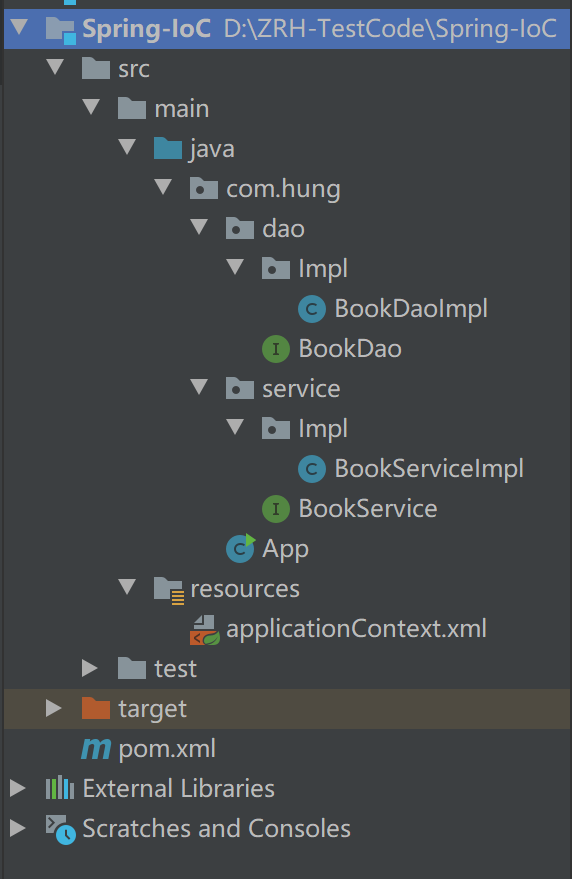
1. Project Structure Overview 2. Code Implementation (1) Data Access and Service Layer Implementation DataAccessObject.java package com.example.dao.impl; import com.example.dao.DataAccessInterface; public class DataAccessObject implements DataAccessInterface { @Override public void executeOperation(...