Core Development Tools dir(): Inspect object attributes help(): Access official documentasion Data Loading Fundamentals import os from torch.utils.data import Dataset from PIL import Image class CustomDataset(Dataset): def __init__(self, base_dir, category_dir): self.base_path = base_dir self.catego...
PyTorch represents data as tensors—multi-dimensional arrays of a single data type—wrapped in a class that bundles operations and processing methods. This section covers setting up a working PyTorch environment using Anaconda and CUDA. Anaconda Setup Download Anaconda from https://www.anaconda.com/do...
Begin with an existing Python 3.6.8 installation—no need to reinstall Python. 1. Install Anaconda Use Anaconda version 2019.03, which is compatible with Python 3.6.8. Successful installasion can be confirmed by running conda --version in the terminal. 2. Configure Package Mirrors Avoid the Tsinghua...
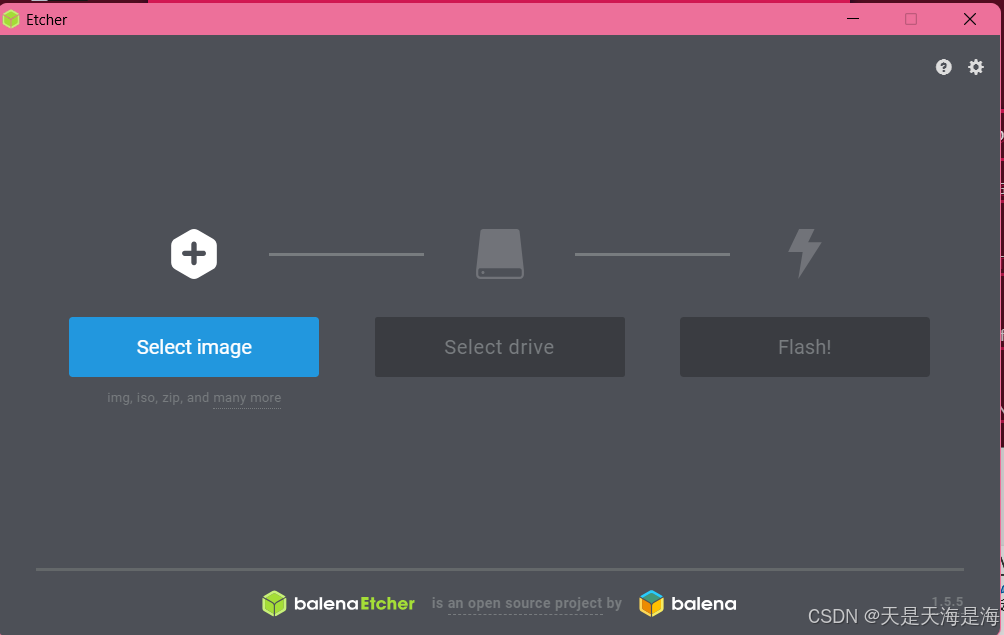
1. Format SD Card and Flash Image 2. Download PyTorch and Torchvision Packages Download the appropriate versions of PyTorch and Torchvision for your system from the officila PyTorch website. 3. Set Up Remote Access with MobaXterm Use MobaXterm for remote control and file transfer to the Jetson Nano....
Dataset Overview The official competition dataset includes 140,000 training sentence pairs, a test set for model evaluation, and a bilingual term dictionary for standardizing specialized vocabulary translations. Each line in the training file train.txt contains an English sentence and a correspondin...
For object detection tasks in PyTorch using YOLOv8, the Ultralytics library provides a streamlined approach. Begin by ensuring the environment supports GPU acceleration if available. import torch from ultralytics import YOLO import os os.environ['KMP_DUPLICATE_LIB_OK'] = 'True' def setup_model(): de...
Negative Log-Likelihood Loss Mechanics The nn.NLLLoss criterion evaluates classification performance by measuring the negative log-probability assigned to correct classes. Given unnormalized model outputs $z$, the loss first applies the log-softmax operatino: $$\text{log-softmax}(z_i) = z_i - \log\s...
Token Embeddings Token embedding is the process of representing discrete units of text, such as words or subwords, as continuous high-dimensional vectors. Since neural networks perform mathematical operations on numerical data, raw text must be converted into a format that captures semantic relation...
RPN Layer Overview The Region Proposal Network (RPN) generates candidate bounding boxes (proposals) from feature maps extracted by the backbone network. This section breaks down core RPN componentts including anchor generation, proposal prediction, and filtering. Anchor Generation Module import torc...
Manual Gradient Computation and Parameter Updates To implement linear regression from scratch, define learnable parameters with gradient tracking enabled: define_weights = torch.normal(0.0, 0.01, size=(2, 1), requires_grad=True) bias_term = torch.zeros(1, requires_grad=True) def compute_prediction(d...