Component-Driven Interface Modeling Building interactive systems often relies on composition. By nesting specialized objects within a manager class, developers can delegate functionality while preserving internal state. #pragma once #include <string> #include <iostream> #include <vect...
C++ supports both single inheritance and multiple inheritance. Single inheritance involves deriving from one base class, whereas multiple inheritance allows derivation from several base classes. In Java, class inheritanec is limited to a single parent using the extends keyword, while implementing mu...
Virtual Functions A function becomes virtual when prefixed with virtual. class BaseClass { public: virtual void operation() {}; // This is a virtual function }; Inheritance of Virtual Functions Virtual function inheritance embodies interface inheritance, where the function signature (including retur...
Visual Studio Code (VS Code) is a lightweight, cross-platform source code editor developed by Microsoft. It runs on Windows, macOS, and Linux, offering consistent functionality across operating systems. Built-in features such as syntax highlighting, intelligent code completion, bracket matching, and...
Problem Overview Consider a linear arrangement of n sequential zones, each containing a key with a specific value. The objective is to recursively divide the entire sequence until only single zones remain. During the merging phase of these divided sections, a score is accumulated. Specifically, when...
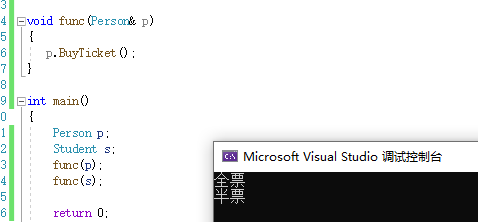
Core Prerequisites for Polymorphic Behavior Runtime polymorphism in C++ requires two simultaneous conditions. First, a base class method must be marked virtual and subsequently overridden in a derived class. Second, the invocation must occur through a base class pointer or reference. When these cond...
String and Vector Reversal with Standard Algorithms Reverse Operations #include <iostream> #include <string> #include <vector> #include <algorithm> template<typename Container> void display(const Container& data); void reverse_string_example(); void reverse_vector_e...
Fundamentals of C/C++ Macros Macros in C/C++ provide a mechanism for compile-time symbol replacement. A common example is defining a constant like PI: #define PI 3.14159265 This allows using PI throughout the code instead of the literal value. Macros can significant reduce code duplication when deal...
QMainWindow is Qt's primary class for creating application main windows. It inherits from QWidget and ships with a pre-built layout structure, including a single menu bar, one or more toolbars, dockable floating widgets, a status bar, and a central content widget. It serves as the foundation for mos...
std::mutex std::mutex is a class defined in the <mutex> header of the C++ standard library, serving as a fundamental tool for multithreaded synchronization. Its primary purpose is to protect shared resources by preventing concurrent acccess from multiple threads, thereby avoiding data races. s...